Athletic Performance Development in Ethiopia: Coaching Quality, Training Practices, Facilities, and Institutional Support as Predictors: A Cross-Sectional Mixed-Methods Study
DOI:
https://doi.org/10.60081/SSHA.4.1.2026.613-624Keywords:
- athletic performance,
- athletics facilities,
- training practices,
- coaching quality
Abstract
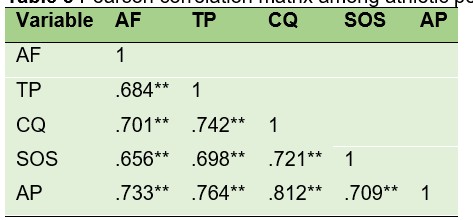
Background: Athletic performance development depends on the effective interaction of facilities, training practices, coaching quality, institutional support, and environmental conditions. In Ethiopia, despite international success in athletics, many regions remain underdeveloped due to systemic challenges related to inadequate infrastructure, weak coaching capacity, poorly structured training programs, and insufficient institutional support. These constraints limit athlete development and hinder the emergence of competitive performance at regional and national levels. Study purpose: This study assessed the multifactorial determinants affecting athletic performance in selected districts of the Kellem Wollega Zone, Western Ethiopia, with specific focus on athletics facilities, training practices, coaching quality, sports office support, and environmental conditions. Methods: A descriptive cross-sectional mixed-methods design was employed. Quantitative data were collected from 66 athletes using a validated 46-item questionnaire covering four domains: Athletics Facilities, Athletes’ Training Practices, Coaching Quality, and Sports Office Support. The instrument demonstrated satisfactory to excellent internal consistency (overall α = 0.862). Qualitative data were gathered through semi-structured interviews with coaches and technical specialists, along with structured facility observations. Descriptive statistics, Pearson correlation analysis, one-way ANOVA, and multiple linear regression were conducted using SPSS version 26 at a significance level of p < 0.05. Results: Athletes reported very low levels of satisfaction across athletics facilities (M = 1.42), training practices (M = 1.72), coaching quality (M = 1.23), and sports office support (M = 1.36), indicating widespread structural and institutional deficiencies. Pearson correlation analysis revealed strong, positive, and statistically significant relationships between athletic performance and coaching quality (r = 0.812), training practices (r = 0.764), athletics facilities (r = 0.733), and sports office support (r = 0.709). Multiple regression analysis identified coaching quality (β = 0.681) as the strongest predictor of athletic performance, followed by training practices (β = 0.549), athletics facilities (β = 0.512), and sports office support (β = 0.438). Collectively, these factors explained 74.3% of the variance in athletic performance (R² = 0.743, p < 0.001). Conclusions: Athletic performance development in the Kellem Wollega Zone is constrained primarily by interconnected deficiencies in coaching capacity, training systems, infrastructure, and institutional support rather than by a lack of athlete potential. Enhancing coaching quality, strengthening training structures, investing in basic athletics facilities, improving institutional coordination, and effectively leveraging available environmental conditions are essential for sustainable athletic performance development. An integrated, evidence-based approach is critical to improving long-term performance outcomes in the region.

Downloads
References
Alexander, A., & Hedrick, S. (1996). The Sports Facilities Assessment Tool (SFAT). University of Illinois.
Assefa, M., Bekele, H., & Haile, A. (2017). The development of long-distance running in Ethiopia: Historical perspectives and current trends. Journal of Sport and Health Research, 9(2), 145–158.
Boullosa, D., Esteve-Lanao, J., Casado, A., Peyré-Tartaruga, L. A., Gomes da Rosa, R., & Del Coso, J. (2020). Factors affecting training and physical performance in recreational endurance runners. Sports, 8(3), 35. https://doi.org/10.3390/sports8030035
De Bosscher, V., Shibli, S., Westerbeek, H., & van Bottenburg, M. (2015). Successful elite sport policies: An inventory of the international sporting success (SPLISS) of nations. Meyer & Meyer Sport.
Derby, R., & deWeber, K. (2010). The athlete and high altitude. Current Sports Medicine Reports, 9(2), 79–85. https://doi.org/10.1249/JSR.0b013e3181d4002b
Feltz, D. L., Chase, M. A., Moritz, S. E., & Sullivan, P. J. (1999). A test of the coaching efficacy model. Research Quarterly for Exercise and Sport, 70(3), 279–292. https://doi.org/10.1080/02701367.1999.10608047
Fitrianto, A. T., Yuliasti, A. P., Kasanrawali, A., Mola, D. W., & Kumar, P. (2026). Modelling Identification of Factors Affecting the Development of Sports Entrepreneurship Opportunities in The Field of Sports Education and Research. JOSSAE (Journal of Sport Science and Education), 10(1), 47–57. https://doi.org/10.26740/jossae.v10n1.p47-57
Girma, B., Geda, B., & Mengistu, S. (2017). Assessment of sports facilities and equipment in selected Ethiopian secondary schools. International Journal of Physical Education, Sports and Health, 4(3), 291–296.
Gizaw, A. (2013). The secret of Ethiopian distance running: Historical and sociological perspectives. Mega Publishing.
Gokhan, B., & Hacer, O. (2016). Socio-economic factors influencing participation in athletics among young adults. International Journal of Humanities and Social Science Invention, 5(4), 12–18.
Hamlin, M. J., Mueno, T., & Lizamore, C. A. (2018). The effect of altitude training on ldl-cholesterol, ldl-particle size and cardiovascular risk in elite athletes. Frontiers in Physiology, 9, 375. https://doi.org/10.3389/fphys.2018.00375
Haugen, T., Sandbakk, Ø., Seiler, S., & Tønnessen, E. (2022). The training characteristics of world-class distance runners: An integration of scientific literature and results-proven practice. Sports Medicine - Open, 8(1), 46. https://doi.org/10.1186/s40798-022-00438-7
Jayaraman, S. (2019). Determinants of elite athletic performance: A holistic review. International Journal of Sports Science and Coaching, 14(5), 680–695. https://doi.org/10.1177/1747954119871542
Liu, R., Wang, S., & Li, J. (2025). How coach leadership behavior influences athletes’ performance: The chain-mediated role of the coach-athlete relationship and psychological fatigue. Frontiers in Psychology, 15, 1500867. https://doi.org/10.3389/fpsyg.2024.1500867
Maciel, M. G., Madariaga Ortuzar, A., Martins, J. C. d. O., Gutierrez, L. A. Á., Bendikova, E., Assis, K. L., Reis, R. F., Mola, D. W., & Uvinha, R. R. (2024). Leisure Styles in Adults: Changes Throughout the COVID-19 Pandemic. Social Sciences, 13(12), 702. https://doi.org/10.3390/socsci13120702
Mesfen, G., & Timerga, P. (2016). Fundamentals of athletics: Training and management. Addis Ababa University Press.
Millet, G. P., Chapman, R. F., Girard, O., & Brocherie, F. (2019). Altitude training: Is there a "sweet spot"? International Journal of Sports Physiology and Performance, 14(3), 273–275. https://doi.org/10.1123/ijspp.2019-0004
Mola, D. W., & Shaw, D. (2024), Analyzing The Reliability And Validity Of Talent Identification Practices For Athletes: An Adaptation Study, Educational Administration: Theory and Practice, 30(5), 12277–12284. https://doi.org/10.53555/kuey.v30i5.4248
Mola, D. W., & Shaw, D. (2024). Assessing the reliabil ity of the talent development environmental ques tionnaire: A pilot study. International Journal of Research -Granthaalayah, 12(3), 117–122. http://dx. doi.org/10.29121/granthaalayah.v12.i3.2024.5584
Mola, D. W., & Shaw, D. (2024). Significance of managerial skills for talent development in Ethiopian athletes. International Journal of Kinesiology & Sports Science, 12(2), 21. https://doi.org/10.7575/aiac.ijkss.v.12n.2p.21
Mola, D. W., Rahman, M. H., Uvinha, R. R., Adane, A. K., Tyagi, S., Adili, D., & Islam, M. S. (2025). Effect of 12 week training program on the fitness and performance of long jumpers. International Journal of Kinesiology & Sports Sci ence. 13(1), 45-53. http://dx.doi.org/10.7575/aiac.ijkss.v.13n.1p.45
Oljirra, G. B., Mola, D. W., Adane, A. K., Kabeta, G. R., Bulti, H. I., Koc, M. C., & Susanto, N. (2026). Combined effects of aerobic and resistance exercises training on muscular endurance and related physiological variables of male middle-distance athletes. Pedagogy of Physical Culture and Sports, 30(2), 163–172. https://doi.org/10.15561/26649837.2026.0209
Potts, A. J., Didymus, F. F., & Bairstow, S. (2023). Psychological resilience in sport: A mixed methods studies of coaches' and athletes' perspectives. Journal of Applied Sport Psychology, 35(1), 112–134. https://doi.org/10.1080/10413200.2021.2015479
Rees, T., & Hardy, L. (2000). An examination of the social support experiences of high-level sports performers. The Sport Psychologist, 14(4), 327–347. https://doi.org/10.1123/tsp.14.4.327
Saunders, P. U., Pyne, D. B., & Gore, C. J. (2009). Endurance training at altitude. High Altitude Medicine & Biology, 10(2), 135–148. https://doi.org/10.1089/ham.2008.1092
Saunders, P. U., Pyne, D. B., & Gore, C. J. (2009). Endurance training at altitude. High Altitude Medicine & Biology, 10(2), 135–148. https://doi.org/10.1089/ham.2008.1092
Singh, A. J., Singh, L. S., & Mola, D. W. (2025). Effect of Interval Training on Selected Motor Abilities of Youth Football Players. Slobozhanskyi Herald of Science and Sport, 29(2), 167-175. https://doi.org/10.15391/snsv.2025-2.07
Singh, L. S., Singh, N. R., Singh, W. J., Singh, O. R., & Mola, D. W. (2024). Optimizing the Speed and Explosive Power Performance of Football Players: The Effect of a Six-Week Neuromuscular Training. Physical Education Theory and Methodology, 24(5), 697–703. https://doi.org/10.17309/tmfv.2024.5.03
Singh, L. S., Singh, W. J., Azeem, K., Meitei, N. M., & Mola, D. W. (2024). Concept of Plyometric Training and Its Effect on Physiological Parameters of Football Players. Physical Education Theory and Methodology, 24(4), 609-618. https://doi.org/10.17309/tmfv.2024.4.13
Siyum, M. (2019). Challenges of talent identification and development: The case of Ethiopian Athletics Federation. International Journal of Sports Science, 9(3), 55-62.
Stone, M., Hornsby, G., Haff, G., & Sands, W. (2022). Principles and practice of resistance training. Human Kinetics.
Taye, A. G., & Singh, A. D. (2025). Interplay of sociodemographic factors and dietary practices of elite Ethiopian track athletes in enhancing sports performance. International Journal of Scientific Reports, 11(4), 145–153. https://doi.org/10.18203/issn.2454-2156.IntJSciRep20250746
Taye, A. G., Bouchh, H., Rahman, M. H., Uvinha, R. R., Legesse, A. K., Adili, D., & Mola, D. W. (2025). Determining the Influence of Coaches, Parents, and Stakeholders on the Development of Youth Football: A Comprehensive Analysis. Physical Education Theory and Methodology, 25(3), 556–565. https://doi.org/10.17309/tmfv.2025.3.11
Taye, A. G., Mola, D. W., & Rahman, M. H. (2024). Analyzing the nutritional awareness, dietary practices, attitudes, and performance of U-17 football players in Ethiopia. Physical Education Theory and Methodology, 24(1), 110–117. https://doi.org/10.17309/tmfv.2024.1.14
Thompson, A., Taylor, N., & Davies, P. (2022). Governance and institutional support in regional sports development. European Sport Management Quarterly, 22(4), 512-530.
Vallée, C. N., & Bloom, G. A. (2005). Building a successful university program: Key and common elements of expert coaches. Journal of Applied Sport Psychology, 17(3), 179–196. https://doi.org/10.1080/10413200591010139
Wicker, P., Hallmann, K., & Breuer, C. (2013). Analyzing the impact of sport infrastructure on sport participation using geo-coded data. Social Science & Medicine, 94, 1–10. https://doi.org/10.1016/j.socscimed.2013.06.007
Wilber, R. L., & Pitsiladis, Y. P. (2012). Kenyan and Ethiopian distance runners: What makes them so good? International Journal of Sports Physiology and Performance, 7(2), 92–102. https://doi.org/10.1123/ijspp.7.2.92
Wilber, R. L., & Pitsiladis, Y. P. (2012). Kenyan and Ethiopian distance runners: What makes them so good? International Journal of Sports Physiology and Performance, 7(2), 92–102. https://doi.org/10.1123/ijspp.7.2.92
Xiao, W., Soh, K. G., Roslan, S., & Prawasti, C. Y. (2021). Effect of periodized training on physical fitness and technical skills of athletes: A systematic review. Sustainability, 13(21), 11825. https://doi.org/10.3390/su132111825
Downloads
Published
Issue
Section
License
Copyright (c) 2026 Desalegn Nageso Katebu, Abdi Gudeta Taye, Tilahun Asrat Mandefro, Dirbeba Maddesa Derresa, Dessalegn Wase Mola

This work is licensed under a Creative Commons Attribution 4.0 International License.